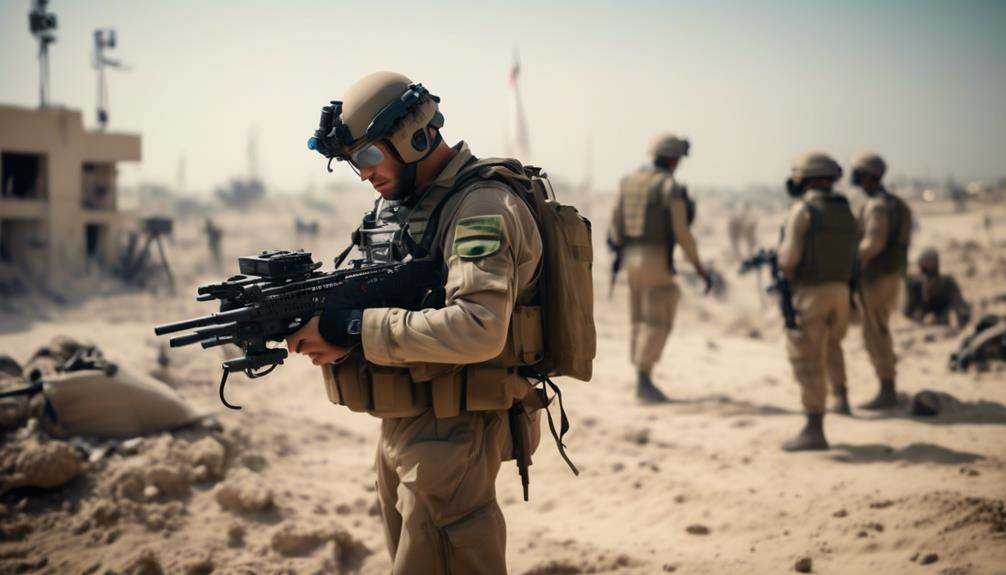

The role of technology in modern warfare cannot be understated and Israel's High-Tech Unit, known as the Multidimensional Unit, has certainly demonstrated the significance of this in the conflict in Gaza. By integrating advanced drones and other cutting-edge technologies, this unit has revolutionized the way warfare is conducted in an urban environment.
However, with its operations attracting international criticism for civilian casualties, the Multidimensional Unit's effectiveness raises important ethical questions. As we explore the role of technology in the Gaza conflict and the implications it holds for future warfare, it becomes evident that the Multidimensional Unit's operations have far-reaching implications that extend beyond the battlefield.
Role and Composition of the Multidimensional Unit
The Multidimensional Unit, a crucial component of the Israel Defense Forces (IDF), plays a pivotal role in the conflict in Gaza. It integrates innovative technologies and special capabilities with soldiers operating in parallel. This unit consists of soldiers from commando and elite reconnaissance units. It operates alongside other units in Gaza, including the 99th Division and the 162nd Division.
The Multidimensional Unit utilizes advanced drones and technological capabilities for target identification and direction of fire. By leveraging new technologies, such as small drones and precision mortars, the unit has been able to effectively destroy anti-tank missile positions, eliminate terrorists, and locate weapons in civilian areas.
The unit's ability to combine artillery and airborne assets at the tactical small unit level is unique and contributes to its success in the conflict. The Multidimensional Unit categorizes new technology based on its integration on the battlefield, ensuring that it is viable before implementation.
These advancements in technology have proven to be effective in reducing casualties among soldiers and civilians in the conflict.
Effectiveness of New Technology in Gaza Conflict
New technology has had a significant impact on the effectiveness of operations in the Gaza conflict, resulting in a reduction in casualties among soldiers and civilians.
The use of new technology has enabled precision targeting, allowing for the precise identification of enemies and the avoidance of civilian casualties. The Multidimensional Unit has effectively utilized small drones and other surveillance technology to achieve this.
In an asymmetric war environment like Gaza, where large forces have less contact, the effective use of technology has been possible. The IDF estimates that around 9,000 terrorists have been eliminated in the conflict.
This showcases the effectiveness of new technology in urban environments, as well as its potential to minimize casualties and achieve military objectives.
Future Operations of the Multidimensional Unit and the 99th Division

As the future operations of the Multidimensional Unit and the 99th Division are yet to be determined, the Israel Defense Forces (IDF) is poised to assess the effectiveness and integration of these units in upcoming conflicts.
The redeployment of reserve brigades and the 36th division indicates potential shifts in operations.
The IDF recognizes the importance of integrating the Multidimensional Unit with other divisions to maximize its capabilities on the battlefield.
The experience gained by the Multidimensional Unit in the Gaza conflict will undoubtedly inform future tactics and strategies.
The IDF continues to prioritize the development and improvement of its technological capabilities to enhance future operations.
The effectiveness of the Multidimensional Unit and its integration with other divisions will be crucial in maintaining Israel's military advantage and ensuring the safety of its soldiers in future conflicts.
Impact of the Multidimensional Unit's Operations
With the ongoing scrutiny surrounding the civilian casualties inflicted by the Multidimensional Unit's operations, the impact of their use of technology in Gaza has become a subject of intense debate and analysis.
Reducing civilian casualties: The Multidimensional Unit's use of advanced technology has allowed for greater precision in targeting, minimizing the risk of civilian casualties. Small drones and surveillance technology have enabled the precise identification of enemies, ensuring that only legitimate targets are engaged.
Precision targeting: The use of new technology has enhanced the unit's ability to accurately locate and eliminate threats, such as anti-tank missile positions and terrorists hiding in civilian areas. This precision targeting has been essential in degrading Hamas battalions and eliminating thousands of terrorists.
The Multidimensional Unit's operations have demonstrated the effectiveness of technology in urban environments, enabling the IDF to achieve its objectives while minimizing civilian harm. However, the high-tech nature of these operations has also brought increased scrutiny and criticism, highlighting the complex ethical considerations involved in modern warfare.
Miscellaneous Information

The Multidimensional Unit collaborates with other units in Gaza, including the 99th Division and the 162nd Division, to carry out their operations. Despite the effectiveness of technology in urban warfare, the Multidimensional Unit's operations have faced international condemnation for civilian casualties. The impact of these casualties and the subsequent international condemnation have raised questions about the ethical implications of using advanced technology in densely populated areas. To provide a clearer understanding, here is a table summarizing the key points:
| Key Points |
|---|
| The Multidimensional Unit collaborates with the 99th Division and the 162nd Division. |
| The unit's operations have faced international condemnation for civilian casualties. |
| The effectiveness of technology in urban warfare has been demonstrated. |
| The conflict in Gaza has resulted in thousands of civilian deaths. |
| The IDF estimates that 9,000 terrorists have been eliminated in the conflict. |
The table highlights the multifaceted nature of the Multidimensional Unit's operations and the complex consequences of using advanced technology in urban warfare. The unit's collaboration with other divisions emphasizes the coordinated effort in carrying out their operations. However, the civilian casualties and international condemnation indicate the ethical challenges and trade-offs associated with the use of technology in densely populated areas. Despite the effectiveness of technology in eliminating terrorists, the loss of innocent lives raises concerns about the long-term impact of such operations.
Frequently Asked Questions
What Specific Technologies and Capabilities Does the Multidimensional Unit Utilize in the Conflict in Gaza?
The Multidimensional Unit in the conflict in Gaza utilizes specific technologies and capabilities, such as advanced drones and the Iron Sting precision mortars. These technologies have been effective in reducing casualties and will inform future tactics and strategies of the IDF.
How Does the Multidimensional Unit Ensure That New Technology Is Viable in the Field Before Implementing It?
The Multidimensional Unit ensures the viability of new technology in the field through rigorous testing methods and field trials. This allows for the assessment of the technology's effectiveness and suitability before its implementation in combat operations.
What Is the Role of the 99th Division in the Conflict in Gaza and How Does It Work With the Multidimensional Unit?
The 99th Division plays a crucial role in the conflict in Gaza, working collaboratively with the Multidimensional Unit. This collaboration allows for the effective utilization of advanced technologies and specialized capabilities to achieve operational objectives and minimize casualties.
How Does the Multidimensional Unit's Use of Technology Contribute to Reducing Casualties Among Soldiers and Civilians?
The Multidimensional Unit's use of technology in Gaza has significantly contributed to reducing casualties among soldiers and civilians. Advanced drones and surveillance technology enable precise identification of enemies, minimizing the risk of civilian harm.
How Does the Multidimensional Unit's Experience in the Gaza Conflict Inform Future Tactics and Strategies for the Idf?
The multidimensional unit's experience in the Gaza conflict informs future tactics and strategies for the IDF by demonstrating the effectiveness of utilizing technology in reducing casualties among soldiers and civilians. The role of the 99th division in the conflict is also considered.
Conclusion
In conclusion, the Multidimensional Unit of the Israel Defense Forces has revolutionized warfare in Gaza through its integration of advanced technology and specialized capabilities.
By effectively utilizing drones and other technological advancements, the unit has demonstrated its ability to identify targets, neutralize threats, and minimize casualties.
While facing international criticism for civilian casualties, the unit's operations have highlighted the significant impact of technology in urban warfare scenarios.
As Israel continues to develop and refine its technological capabilities, the Multidimensional Unit's operations will undoubtedly shape future tactics and strategies.


